Yearend
TaxAdvisorExperience
Designing a guided tax-return product that made complex 1040 filing flows clear and reviewable
Role
Product Designer
Duration
2020
Platform
Web · FinTech SaaS
Team
1 PM, 2 Engineers, Tax advisors, 1 Designer (me)
Users
Startup founders, employees with equity compensation, tax advisors
I led end-to-end UX for the Yearend tax-return product across information architecture, section-level flow design, and review states — including personal profile, W-2/1099 income, deductions, and file-ready confirmation.
Overview
Outcome Snapshot
What shipped, why it mattered, and how impact was measured.
I designed Yearend's tax-return experience as a clear, step-based product flow: collect profile inputs, complete income modules (W-2 and 1099), process deductions, and finish with explicit filing-readiness checks. The goal was to reduce form anxiety and make users confident that nothing critical was missed.
Founders and startup employees had complex tax situations across multiple forms and states, but their filing workflow was fragmented across documents, spreadsheets, and advisor back-and-forth. They needed one structured interface that could guide completion and improve confidence before filing.
6-step
Return flow structure
Federal + State
Parallel filing visibility
2020
Core product launch year
2021
Acquired by Carta
Challenge
Complex Tax Inputs Needed One Trustworthy Workflow
Users had to reconcile personal info, W-2s, 1099s, deductions, and filing details across multiple screens and external documents. Even when data existed, the overall flow felt opaque and error-prone.
The design challenge was not just form completion. It was confidence: helping users understand where they were in the process, what was complete, and what still needed review before filing.
- Multi-form complexity across profile, income, deductions, and filing
- Low confidence in completeness before final submission
- Review bottlenecks caused by unclear section states
- Deadline pressure amplified cost of missing data
Solution
Modular 1040 Flow Across Income and Deductions
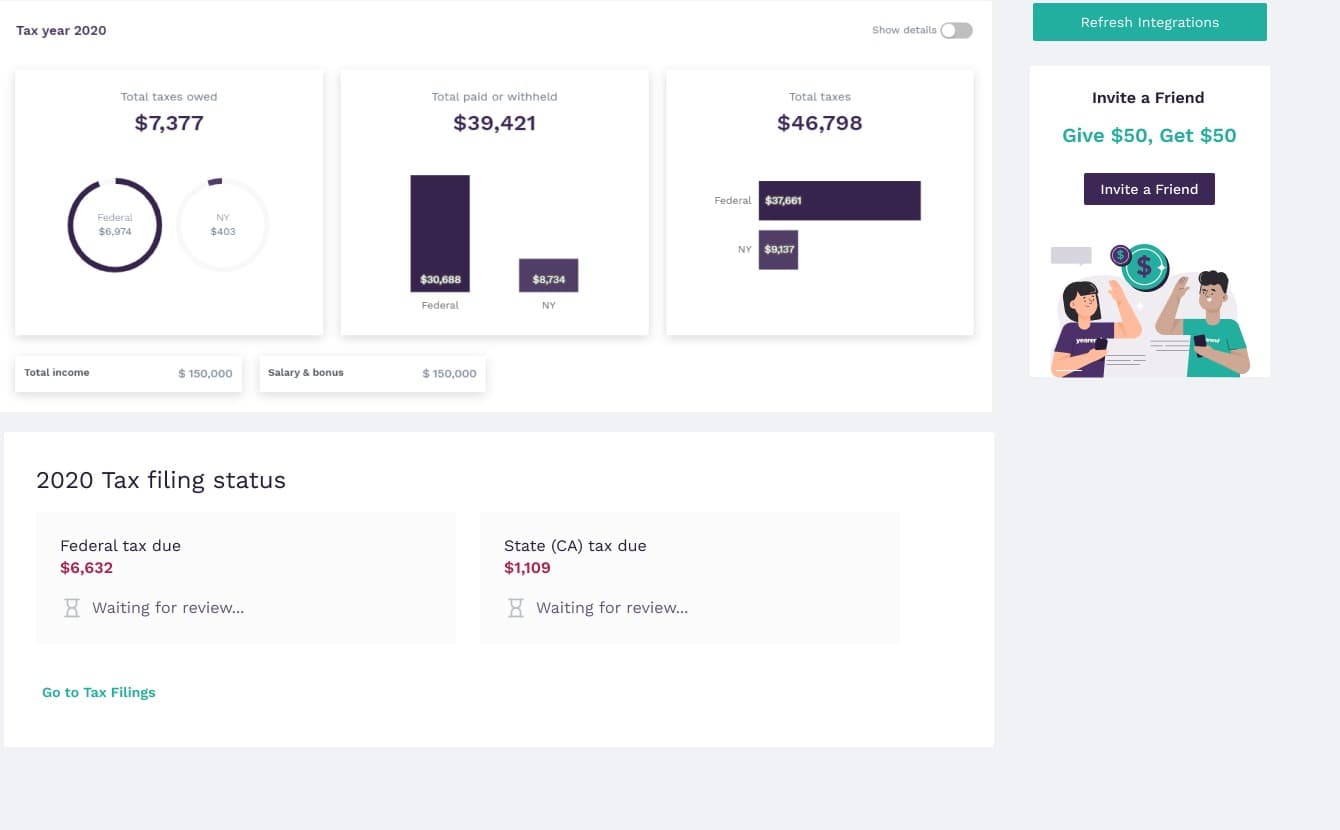
I structured the product around a predictable sequence with persistent navigation: personal info, federal/state scopes, income modules, deductions, review, and file. This gave users a stable mental model through a long and sensitive process.
Inside each module, I used high-density but readable cards, inline edit controls, and section progress indicators so users could audit details without losing context.
- W-2 and 1099 modules with running totals and edit-in-place review
- Deduction categories grouped for scanability with clear completion states
- Persistent section navigation for Federal / State / Review / File
- Step-by-step progress model reducing abandonment and confusion
Impact
Filing-Ready Confidence Through Explicit Review States
The redesigned flow turned a stressful, fragmented process into a guided product journey where users could see completion status and final readiness before filing.
This productized workflow became part of Carta after the acquisition, extending Yearend's tax UX approach into a broader fintech platform.
Checklist
Section-level filing readiness
Single flow
Input -> review -> file
Higher
User confidence before submit
Acquired
Yearend joined Carta
Reflection
Key Learnings
01
Structure Creates Trust in Financial Decisions
When users face tax and equity uncertainty, a clear step-by-step structure builds confidence faster than adding more explanatory copy.
02
Advisor Tools Must Serve Both Expert and Client
The best experience balanced advisor efficiency and client comprehension in the same workflow, rather than optimizing one side in isolation.
03
Productized Advisory Can Scale Without Losing Nuance
Turning advisory work into product flows does not mean removing expert judgment. It means giving experts better context and decision checkpoints.
Next Project